

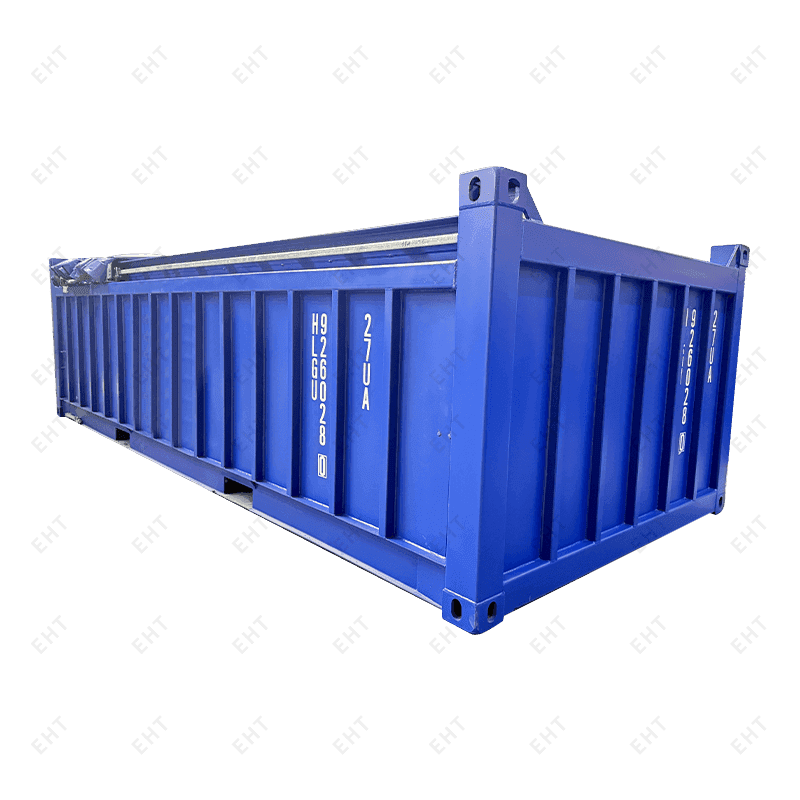
Container sfuso a mezza altezza con coperchio scorrevole da 20 piedi
Il container per prodotti sfusi a mezza altezza con copertura scorrevole da 20 piedi è un container specializzat...
Two containerised BESS units with the same nominal megawatt-hour rating can behave very differently once they are installed. One will hold its rated capacity through a hot summer afternoon and communicate cleanly with the site control system. The other may derate early, trip on cell imbalance, or fail its fire suppression test during commissioning. The difference rarely comes down to the battery cells themselves; it comes from the system architecture, thermal design, and manufacturing quality of the containerised enclosure.
If you are evaluating containerised BESS suppliers, the practical question is not simply "how many megawatt-hours do I need?" The real question is whether the unit has been engineered as a complete system, with mechanical, electrical, and safety layers designed to work together for a 15- to 20-year operating life.
A containerised BESS is a factory-integrated power plant inside an ISO-standard enclosure. Instead of assembling battery racks, inverters, and switchgear on site, the manufacturer integrates everything into a single container that arrives ready to connect. A typical unit contains:
The integration quality between these components determines real-world performance. A container with excellent cells but poor thermal design will throttle output on the hottest days. A container with a poorly tuned EMS may fail frequency regulation tests or cause unnecessary cycling of the PCS. The container is therefore not a box; it is the structural backbone, thermal envelope, and safety barrier for the entire energy storage system.
Rated energy capacity is the first number buyers compare, but it is rarely the deciding factor. Usable capacity depends on depth of discharge, round-trip efficiency, ambient temperature, and the charge-discharge profile of the application. Two systems with identical MWh ratings can differ by 10 to 15 percent in usable throughput if their thermal management strategies and BMS settings are different.
The container format also imposes physical constraints that shape the design. The table below summarises common sizes and their typical roles.
| Format | Typical Capacity | Cooling Approach | Typical Applications |
|---|---|---|---|
| 20 ft | 1-2 MWh | Air or liquid cooled | Commercial, small C&I, behind-the-meter |
| 32 ft | 3-4 MWh | Liquid cooled | Utility-scale, renewable integration |
| 40 ft | 3.5-5 MWh | Air or liquid cooled | Utility-scale, peak shaving, off-grid |
| 45 ft | 4-7 MWh | Liquid cooled | Large projects, multi-hour duration |
For a commercial or small industrial site, a 20 ft containerised BESS is often the right scale. It can be delivered on a standard flatbed, positioned with a normal crane, and connected without heavy civil works. Units in this class typically cover 1-2 MWh, enough for load shifting, peak demand reduction, or backup power inside a microgrid.
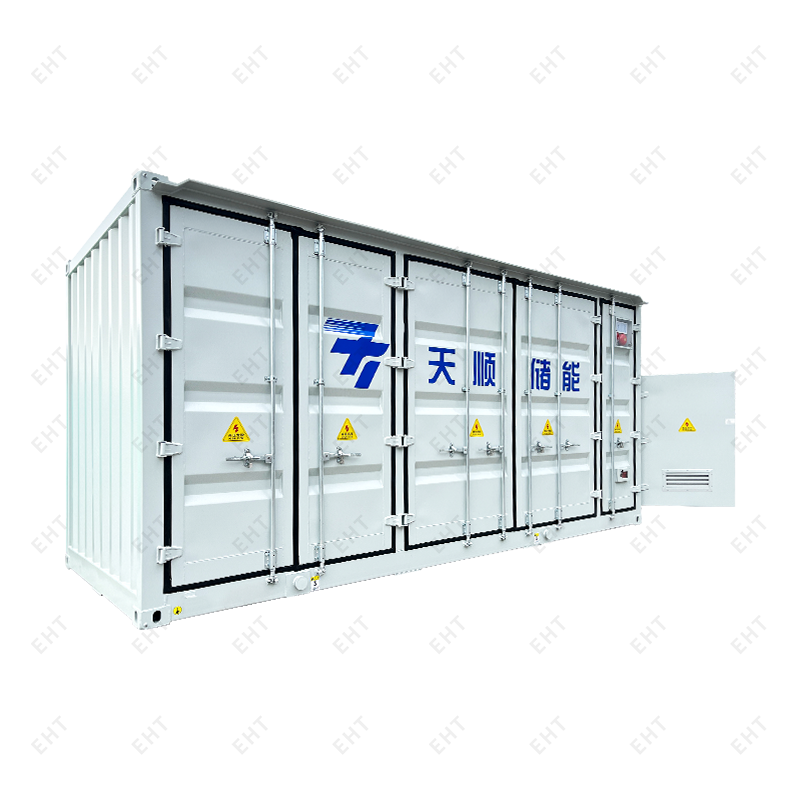 20ft Containerized Battery Energy Storage for Grid and Renewable Energy This 20-foot containerised BESS suits commercial and small industrial sites, offering flexible capacity and thermal management options for load shifting, peak shaving, and microgrid backup. View Product →
 Liquid-cooled systems achieve higher energy density because heat is removed more efficiently than with air cooling, allowing battery packs to be arranged more tightly inside the container. The trade-off is added complexity in the coolant loop, including pumps, valves, and scheduled maintenance. In hot climates or high-throughput applications, liquid cooling is usually the safer choice. A 32 ft liquid-cooled unit, for instance, can deliver around 3.7 MWh in a footprint that still fits standard transport and site access constraints.
When the project moves into utility-scale territory, larger formats such as 40 ft or 45 ft containers reduce the number of units, cabling runs, and pad foundations required for a given site capacity. A 40 ft unit rated near 3.5 MWh is a common choice for solar-plus-storage plants, grid connection points, and diesel-replacement projects in remote areas.
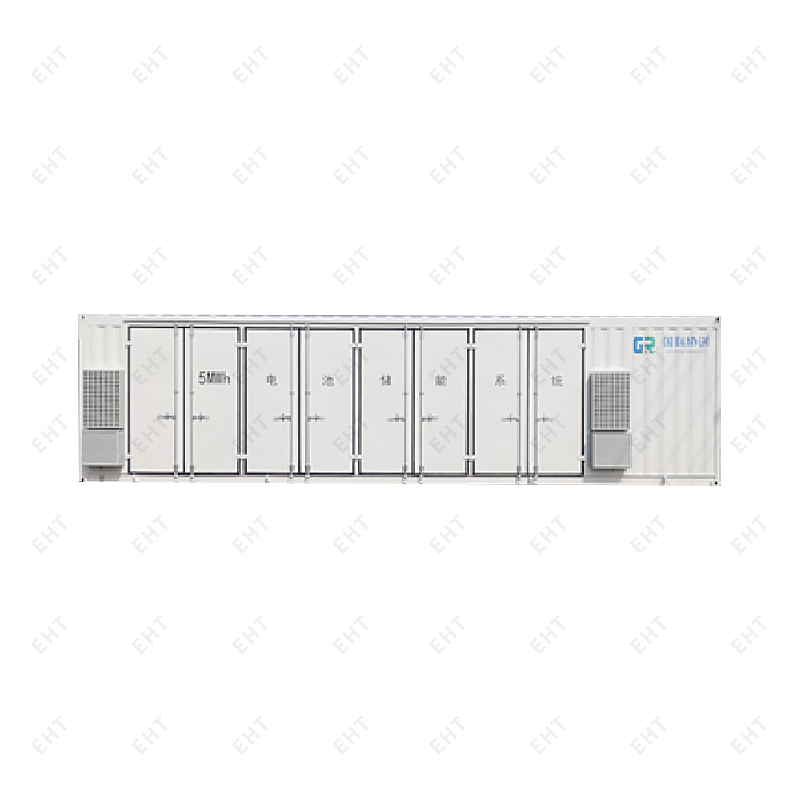 40ft High-Capacity Liquid-Cooled Battery Energy Storage Container (3–5 MWh) Built for utility-scale projects, this 40-foot unit provides 3–5 MWh with liquid cooling, supporting centralized storage needs while effective thermal management protects battery life and project economics. View Product →
 Battery cells degrade faster at elevated temperatures. For every 10 °C above the optimal operating window, the cycle life of a lithium-ion cell can be cut roughly in half. This is not a small detail; it is often the largest factor in the long-term financial case for a containerised BESS. A container with an oversized HVAC system costs a little more upfront and saves far more over the project life through reduced degradation and fewer replacement cycles.
Thermal design must be evaluated under full load, not just at nominal conditions. Ask the supplier for the temperature spread across racks at the highest expected ambient temperature, and check what happens if the HVAC loses power during a peak charging event. The system should have a documented derating or shutdown strategy that protects the cells without creating a safety risk.
Fire safety is closely related to thermal management. Most containerised BESS designs include distributed temperature sensors, smoke detection, and a suppression system rated for lithium-ion fires. The key requirement is early detection and containment: a thermal runaway inside one module must be detected in seconds, and the enclosure design should prevent propagation to adjacent racks even if one module fails completely. Review the fire suppression agent, its coverage volume, and the certification documents for the specific container model you are considering.
Containerised BESS units are often deployed in coastal ports, remote sites, or utility yards where they face salt air, high wind, and vibration during transport. The structural quality of the enclosure matters as much as the electrical components. A container that flexes or corrodes will eventually damage the battery racks and power electronics inside it.
Look for a manufacturer that builds to recognised management system standards, including ISO 9001 for quality, ISO 14001 for environmental management, and ISO 45001 for occupational health and safety. For specific regions, additional product certifications are important. CE certification covers the European market, CSA certification covers the United States and Canada, and AS/NZS 1170.2 structural design certification is expected in Australia and New Zealand because of wind loading requirements. Ask whether the container manufacturer holds these certifications itself or relies on a component supplier to provide them.
Manufacturing quality is also visible in the details: automated welding stations for corner posts and frame assemblies, consistent paint and coating thickness, properly sealed doors and cable entries, and clean cable routing inside the container. A reputable manufacturer should be able to share factory test records from recently built units and explain its welding and inspection procedures. If those records are not available, that is a warning sign.
The most common procurement mistakes with containerised BESS units are under-specifying the site environment, assuming that rated capacity equals usable capacity, and ignoring auxiliary power consumption. A 3 MWh container that draws 30 kW for cooling on a hot day delivers noticeably less net energy than a design with more efficient thermal management. Ask for auxiliary load data at both nominal and maximum ambient temperatures.
Another frequent issue is scope confusion at the ordering stage. Confirm whether the price includes the transformer, connection cabling, commissioning, and operator training. These items are sometimes listed as optional extras and can add 15 to 25 percent to the total project cost. Clarify delivery terms, access requirements, and whether the container can be lifted by cranes at both ends of the journey.
Before placing an order, request the following documents:
If your team is new to specifying these systems, a practical guide to containerised BESS design and EMS configuration is a useful starting point. For organisations planning multiple deployments, working with a manufacturer that supports dealer and service networks simplifies spare parts, maintenance, and warranty support across sites.
Containerised BESS projects succeed or fail on specification details that are easy to overlook during the quoting phase. Rated capacity is only the beginning. Usable capacity, thermal performance, structural certification, and manufacturing quality determine whether the system performs as promised over two decades of operation. A containerised BESS is an industrial asset, and the extra effort spent verifying the enclosure, integration, and certifications will pay back many times over the life of the project.

Cosa rimanere aggiornato?
Contattaci tramite l'indirizzo e -mail di seguito.
N. 178, Wuzhou East Road, Zona di sviluppo economico, Yangzhou, Jiangsu.
Copyright 2024 Yangzhou Yichengke Integrated Technology Co., Ltd. All Rights Reserved.

